The Jackal: NZ First
Showing posts with label NZ First. Show all posts

31 Oct 2025

New Zealand's Housing Crisis Needs a CGT Cure

The Labour Party has finally released it's long-anticipated capital gains tax (CGT) policy, and despite the resulting and predictable right-wing backlash, it's a thoroughly researched and measured approach, targeting profits from the sale of residential and commercial investment properties at a flat 28 per cent rate, commencing July 1, 2027, exempting family homes, farms, and inheritances.

The revenue, projected at $385 million in its first full year rising to $1.35 billion thereafter, would fund a "Medicard" granting every New Zealander three free GP visits annually. This is no radical upheaval, but a pragmatic alignment with global norms...a quiet assertion that untaxed windfalls from non-productive bricks and mortar should shoulder some burden for the public good.


On Wednesday, 1 News reported:

 
'Bring it on': Hipkins targets Luxon in capital gains tax debate

National has been poised to jump on Labour's long-awaited tax policy and has already pushed out a series of attack ads on social media.

Asked about those ads, Hipkins said he was more than happy to debate Christopher Luxon about his personal finances.

"Bring it on. He sold four houses last year and made more money, tax free, from doing that than he made in the prime minister's salary, which he paid tax on every dollar of.

"Why should he be able to make more than $600,000 in one year from flipping properties whilst the people who go out and work hard every day for a living pay tax on every single dollar that they earn?"


However, as with any whisper of equity in our overheated fiscal debates, the response from the governing coalition has been a cacophony of outrage, a theatrical overreaction befitting a Shakespearean farce. Christopher Luxon, from his perch in Malaysia, decried it as "a tax on every single business in New Zealand," a handbrake on growth that would inflate consumer prices. Finance Minister Nicola Willis echoed the Prime Minister's alarmism, branding it a "terrible idea" that burdens small enterprises. ACT's David Seymour invoked "tall-poppy politics," while New Zealand First dismissed the rollout as a "trainwreck."

The problem for the incumbents is that their fear-mongering, dressed as fiscal prudence, is being laughed out of the room. Their reflexive defence of the status quo where capital accrues to the few while the many scramble for scraps is clearly not supported by the majority of New Zealanders, particularly those who haven't secured a family home yet.

Labour Leader Chris Hipkins rightly countered those who want the housing crisis to get worse by succinctly pointing out that it's "the most progressive tax change in a generation," a simple mechanism to redistribute the fruits of speculation towards healthcare for all.

The right's hysteria ignores a plain truth: New Zealand stands anomalous among OECD peers in shunning a comprehensive CGT. Only Mexico joins us in this outlier status; the rest, from the United Kingdom to Canada and our trans-Tasman kin, levy such taxes on capital gains, often at rates exceeding 20 per cent, without precipitating economic Armageddon. Denmark tops the scale at 42 per cent, Norway close behind at 37.2 per cent, yet their economies hum with innovation and productivity those within New Zealand's current government can only dream of.

These nations prove that taxing unearned gains does not stifle enterprise; it channels investment from speculative housing towards ventures that build lasting wealth and safeguard society from the dysfunction of rampant inequality. In our own backyard, the absence of such a levy has fuelled a property obsession, distorting capital away from productive ends and into the hands of flippers who treat homes as mere commodities. Non of their hoarded wealth trickles down.

Worse still is the National Party's parade of disinformation, a deliberate sleight of hand to obscure the proposal's narrow scope. Luxon and Willis peddled the myth that it ensnares "every business," when Labour's design spares shares, KiwiSaver, and most commercial operations unless tied to property sales. This is not oversight; it is calculated distortion, echoing past disinformation campaigns where National accused opponents of "tax and spend" follies. The truth, as Deloitte's Robyn Walker affirms, is a "sensible middle ground" that mirrors the 2018 Tax Working Group's pragmatic recommendations.


On Tuesday, RNZ reported:

What you need to know: Seven questions about a capital gains tax

The minority view of the report said it agreed there was a strong case for extending taxes to untaxed capital gains.

But it said the comprehensive capital gains tax as proposed in the group's wider final report would outweigh the benefits.

"In our view a comprehensive approach would impose efficiency, compliance and administrative costs that would not be outweighed by the increased revenue, fairness perceptions, and possible integrity benefits of the broader approach. Instead we support a more moderate approach of extending current rules taxing gains, to property categories, only to the extent that benefits clearly exceed costs."

Robyn Walker, tax partner at Deloitte, said Labour's proposal was a sensible middle ground that mirrored that view.

"I think it's a good compromise, I guess, and it means that hopefully we're not like in the weeds on the details of capital gains taxes for the next 12 months, which even as a tax person, I don't want to do that."


The right-wing's fear tactics betray a deeper unease: the proposal unmasks the coalition's own indulgences. Consider Luxon himself, whose property portfolio has been a study in untaxed bounty. Before entering politics, he amassed seven Auckland holdings. Recent sales, a Grey Street, Onehunga unit for a tax-free gain potentially exceeding $250,000, and another Onehunga unit netting $295,000, have swollen his coffers, all shielded from capital levies. His on-paper gains topped $4.34 million last year alone, a sum nearly nine times his parliamentary salary.

Luxon claims transparency, yet his property flips evaded scrutiny under the old bright-line test. This is the man decrying a CGT as a growth-killer, while his government eases the very rules that once curbed such unproductive profiteering.

Under National's watch, the bright-line test, Labour's 2021 extension to 10 years, was slashed to two years from July 1, 2024, allowing quicker flips without tax. Interest deductibility for rentals, phased out by Labour to cool speculation, has been restored: 80 per cent from April 2024, full by 2025. These tweaks supercharge flipping as a "business," rewarding those who treat housing as a casino rather than a human right.

Many coalition MPs ledgers brim with numerous investment property assets. 33 National MPs command a whopping 117 investment properties, making their own personal interest, not the public good, their driving philosophy. National's coalition partners aren't much better. ACT's Parmjeet Parmar for instance lists seven Auckland holdings, making property value increases a paramount driver in all policy development. Scandals abound, from David Seymour lying about his three properties while claiming he couldn't afford one on an MPs salary to numerous National MPs in 2013 shielding rentals in superannuation schemes to recent trust-shuffles, like National MP Carl Bates' 25 properties tucked away pre-election, evading the pecuniary register. Trusts, those opaque veils, largely conceal Member's spousal assets and valuations, rendering parliaments so-called transparency a farce.

Flipping houses shouldn't masquerade as legitimate enterprise in a nation where shelter is a cornerstone of dignity and a requirement for survival. Speculating in property has birthed a deepening crisis: Stats NZ reports homeownership at only 66.0 per cent, with young Kiwis (25-29) at just 44 per cent, down from 61 per cent in 1991. The median multiple (house price to income) hovers at 7.7, "severely unaffordable", with Auckland at around ten times what the average household earns. Median prices linger at $761,000 nationally, $909,000 average value, while rents strain at $635 per week. 51 per cent of Kiwis cite high prices as the paramount barrier, 49 per cent the rental squeeze. Renters, 83 per cent aspiring to own, despair: 62 per cent deem it unattainable. They have given up on the Kiwi dream of owning a house and having a family or will be moving abroad.

A CGT is no panacea, but it is a vital corrective, curbing the frenzy that prices families out and starves public services, an issue compounded by those in positions of power, which is a vital step to safeguarding New Zealand's future. The coalition's propaganda, laced with Luxon's own gains and their asset-hoarding mentality, rings completely hollow. It's time to tax the flippers, not those who aspire to home ownership. Only then might we reclaim a housing market for the many, and not just the vested few.

6 Aug 2025

They're Distracting You From Their Policy Failures

In a political landscape increasingly defined by distraction and dysfunction, the National-led coalition has descended into a quagmire of trivial pursuits and economic neglect. The latest offerings from Winston Peters and David Seymour exemplify this trend: Peters’ pointless push to legislate the countries name as, well, New Zealand, and Seymour’s obsession with deregulating the placement of backyard sheds. These aren't the actions of a government focused on the pressing issues facing Aotearoa; they're the desperate ploys of government MPs scrambling to stay in the headlines while the economy teeters and ordinary Kiwis bear the brunt.


On Friday, the NZ Herald reported:

 
Making ‘New Zealand’ country’s official name added to NZ First’s ever-changing list of bills

New Zealand First’s stack of publicly announced Member’s Bills has grown yet again, with the party today proposing legislation to make “New Zealand” the official name of the country in law.

The legislation – which still needs to be picked from the ballot of Member’s Bills – comes in response to the party’s unease over the use of “Aotearoa”, including in Parliament. 
 
...

It’s the eighth Member’s Bill the party has announced this year, but due to the rules of Parliament, NZ First is only able to have four in the ballot at any one time.

Only MPs who aren’t ministers – NZ First has four backbenchers – can have Member’s Bills and they can only have one in the ballot at a time.

This has meant the party has had to shuffle out several of the bills it has previously announced, but which remain on NZ First’s website as “Our Member’s Bills”.

For example, the “Conscience Acts Referendums Bill”, which was revealed in March to remove conscience votes in Parliament and instead require some particular legislation to go to a national public referendum, no longer appears on Parliament’s website.


Let’s start with Winston Peters' bungling, whose proposal to enshrine “New Zealand” as the country’s official name is another play for the bigoted vote. The name is already codified in law, used globally, and etched into our national identity. This legislative stunt serves no practical purpose and diverts parliamentary resources, which could be better utilised to try and fix the countries more pressing issues, such as homelessness and the cost of living crisis. It reeks of Peters’ trademark populism, a distraction from the coalition’s inability to address substantive issues it appears to have no intention of actually solving.

Similarly, David Seymour has championed easing rules on shed placement, arguing that shrinking section sizes justifies this change. While Seymour frames this as a win for homeowners, it’s a policy so niche it barely registers against the backdrop of people's economic hardship. There's no record of any New Zealander ever being fined for having a garden shed in the wrong place, leading one to wonder: is this really the best use of ministerial time when 112,496 people face severe housing deprivation? These trivial policies are part of a broader pattern of headline-grabbing stunts designed to mask the coalition’s lethargy on substantive issues such as Gaza. They're trying to distract you from their economic mismanagement as well.

Furthermore, the government’s decision to overhaul the National Certificate of Educational Achievement (NCEA) is another knee-jerk reaction, rushed through without robust research or consultation in an attempt to take the focus off of the consequences of their policies, such as declining achievement rates, a decline that's largely the result of our reduced living standards. But instead of actually doing anything to make sure children and young people are in a position to actually learn and reach their full potential, the coalition is more concerned with saving money by providing inedible school lunches.

Education Minister Erica Stanford’s plan to replace NCEA, a system in place for over 20 years, with a new framework lacks evidence of its efficacy. Only 56% of students passed NCEA literacy and numeracy writing tests in June 2023, and 64% passed reading, yet the coalition offers no data to suggest their overhaul will improve these figures. They're again using the opportunity to blame Labour for unworkable NCEA changes brought in by the John Key led National government. This move appears less about educational reform and more about diverting attention from the cost-of-living crisis, where consumer inflation remains stubbornly high and domestic price pressures show no signs of easing, which is having a detrimental effect on young people's ability to learn.

The coalition’s economic mismanagement is also starkly evident in the escalating wave of business liquidations and mounting mortgage stress. Since the National-led government took office in November 2023, business liquidations have surged, with 2,976 companies entering liquidation in 2024 alone, a 27% increase year-on-year, driven heavily by the downturn in construction, hospitality, and our retail sectors. Non-performing loans have also risen, with 485,000 consumers in arrears as of May 2025, including 21,900 mortgage holders behind by over 30 days. With New Zealand’s GDP contracting by 2.1% in the year to September 2024, despite a population growth of 1.2%, and net core Crown debt reaching $175.5 billion (42.5% of GDP) in June 2024, the economic outlook is grim. Treasury forecasts debt to climb to $192 billion by mid-2026, and economists warn that ongoing austerity and global trade shocks, such as Trump's 15% tariffs, could push liquidation rates higher, with small-to-medium enterprises (97% of New Zealand’s businesses) particularly vulnerable to further closures.

Meanwhile, mortgage holders face mounting pressure as interest rates, which rose sharply from 2.58% in August 2021 to a peak of 7.5% by January 2024 under the previous Labour government’s tenure, have only modestly declined under the National-led coalition. As of July 2025, the average one-year fixed mortgage rate sits at 4.97%, a drop of about 170 basis points since the Reserve Bank began cutting the Official Cash Rate (OCR) from 5.5% to 3.25% since August 2024. It's little wonder that the major banks are making record breaking profits ($7.22 billion in 2024) given they aren't always passing on the Reserve Bank's monetary stimulus. This relief is marginal for many, as debt-servicing costs remain elevated.

The National-led government’s trickle down economics and tax cuts, which disproportionately benefit higher earners, have failed to stimulate any meaningful economic recovery. Wage growth, slowing to 3.7% in June 2025 from 6.9% in June 2023, lags behind living costs, with inflation at 2.7% in June 2025 (up from 2.1% estimates) and essentials like rent, food, and utilities consuming 62–98% of disposable income for many low-income households. This mismatch exacerbates financial strain, as the coalition’s focus on fiscal restraint over investment stifles demand and deepens hardship for ordinary Kiwis.


David Seymour’s rhetoric about “saving” even more money (read less money in your back pocket), through further cuts and policy tinkering, such as his Regulatory Standards Bill, is a hollow promise that threatens to deepen New Zealand’s economic woes. Far from delivering efficiency, the bill imposes $50–60 million annually in administrative costs, as estimated by MBIE, due to mandatory Consistency Accountability Statements and a new Regulatory Standards Board that duplicates existing oversight mechanisms. Seymour and other coalition MPs have falsely claimed that the holy grail of artificial intelligence will somehow magically streamline these processes to reduce costs, yet experts like Victoria University’s Andrew Lensen has categorically debunk this claim, noting AI’s need for human oversight limits cost savings. Even if AI had the ability to streamline the government's processes, their failure to adapt is in stark contrast to their dishonest rhetoric, especially in respect to the National led government slashing $1.5 billion from public sector budgets, including innovation and digital transformation programmes. There's no question that since taking office in November 2023, the coalition has stifled AI development critical for economic resilience. By cutting and deregulating without researching long-term impacts, Seymour’s latest iteration of an already defeated bill undermines worker protections and environmental standards, standards that are there to ensure that taxpayers don't always foot the bill for things like the extractive industries environmental pollution. This reckless approach pulls money from an already struggling economy, money that could be going towards more productive sectors such as business innovation and housing security.

Westpac’s senior economist Satish Ranchhod warns that domestic inflation pressures will persist, yet Seymour’s policies seem poised to deepen hardship for the 120,000 already deprived children struggling to get by amid the cost-of-living crisis. It's becoming more aparent with every press release that this “Coalition of Chaos” government thrives on distraction, not delivery.

From Peters’ name game to Seymour’s shed obsession, their policies are an excercise in irrelevance. Meanwhile, the real issues, rising homelessness, the cost of living crisis, hungry children, business failures, and mortgage stress, go unaddressed. With 65% of New Zealanders believing the economy is rigged for the rich, the coalition’s focus on trivialities only fuels discontent. Aotearoa deserves better: a government that tackles the cost-of-living crisis head-on, not one that rearranges the deck chairs while the economy continues to burn.

2 Jul 2025

Democracy Under Siege: NZ Government Gags Youth MPs

In a development that epitomises authoritarian overreach masquerading as administrative procedure, the Coalition of Chaos government has decided to censor Youth MPs during the 11th Youth Parliament, an event that was meant to amplify the free voices of our young people.

The revelation that youth representatives, invited to Parliament to debate the very issues that will define their futures, have been forced to water down or outright remove criticisms of government policy represents a fundamental assault on the democratic principles this coalition once claimed to champion.

Yesterday, RNZ reported:

 
Youth MPs accuse government of 'censoring' them, ministry says otherwise

The government is rejecting accusations it is censoring Youth MPs, saying the protocols followed are the same as 2022 and the young people get the final say on their speeches.

However, the email sent to one Youth MP carries the subject line "changes required", and stated the ministry "have had to make some changes".

Some of the Youth MPs involved say they will not be suppressed and the issue has fuelled the fire to make their voices heard.


Coalition parties spent years in opposition decrying Labour's supposed nanny state mentality, lambasting what they saw as overbearing governmental control. Yet here they stand, dictating what young people can say in a forum explicitly designed to foster free expression and democratic participation. This isn't the bold, open democracy that Chris Luxon promised, it's a masterclass in hypocrisy that would embarrass even the most cynical political operator.

The current Youth Parliament involves 123 young people aged 16-18, selected by MPs to represent their constituencies. But despite this broad church of political views, these voices are being systematically silenced when they dare to speak truth to power. 

The Ministry of Youth Development's decision to issue emails with the subject line "changes required" to approximately half of the Youth MPs preparing to address Parliament reveals breathtaking audacity from a government that has transformed from opposition critics into zealous practitioners of the very control they once condemned.

Youth MP Thomas Brocherie, co-director of Make It 16, cut straight to the heart of the matter:


However, the Youth MPs spoke to reporters at Parliament with one - Thomas Brocherie, a spokesperson for Make it 16, a group pushing for a voting age of 16 - saying the approach taken to the speeches was diluting the value of the Youth Parliament.

"We have been told to not argue on either side of contentious issues such as the pay equity reforms or the Treaty Principles Bill for the excuse that they are current topics in the current Parliament. This is not just illogical, it is censorship," he said.

"We cannot say we value democracy unless we actually show and prove we value democracy. Silencing the stakeholders of the future does not value democracy."

Another Youth MP Nate Wilbourne, a spokesperson for Gen Z Aotearoa, said rangatahi were being silenced and censored.

"We've been told to soften our language, to drop key parts of our speeches and to avoid criticizing certain ministers or policies. This isn't guidance. This is fear based control."

Brocherie said the emails being titled "changes required" was "not at all a suggestion, that is blatant editing, they want us to change something to suit their purpose, to suit their agenda".

Youth MP Lincoln Jones said they were provided with "a PDF of edited changes... delivered to our inbox, and that was the expected requirement, that we speak that speech".

"It's honestly like they've gone through with it with a microscope to find any little thing that might be interpreted wrong against, I guess, the current government."


These young people's arguments carry particular weight when considering the existential nature of the issues they're attempting to address, climate change being foremost among them.

Two-thirds of New Zealanders expect severe climate impacts in their area over the next 10 years, whilst New Zealand ranks 41st internationally as a "low climate performer". These are not abstract policy debates for young New Zealanders, they represent the scaffolding of their future. When Youth MP Nate Wilbourne speaks of the "war on nature" and attempts to name ministers responsible for environmental vandalism, he exercises the fundamental democratic right to hold power accountable on matters of existential urgency.

The government's justification for this censorship reveals either breathtaking ignorance or calculated dishonesty. Minister for Youth James Meager insists speeches are not being censored whilst simultaneously defending a process that removes criticisms of government policy, edits references to environmental action, and sanitises language deemed "too political." This isn't guidance; it's censorship dressed up in bureaucratic doublespeak.

However, the decision to abandon livestreaming of this year's Youth Parliament, citing "resource constraints" represents perhaps the most cynical element of the government's censorship regime. Previous Youth Parliaments were fully livestreamed, allowing young New Zealanders across the country to witness democratic participation in action. Youth MP Lincoln Jones rightly identified this change as an attempt to "ensure that speeches that don't fit the narrative of this government are not getting out to the general public."

Youth MP Sam Allen noted that participants have gone "from what should be a really exciting event" to "just feeling quite scared" about potential consequences. This erosion of confidence in democratic participation reflects something far more troubling than isolated administrative overzealousness, it's symptomatic of a broader democratic crisis that extends well beyond Parliament's youth programme.

This pattern of democratic erosion has not gone unnoticed by New Zealand's most respected institutions. The New Zealand Law Society's recent watershed report painted a stark picture of rule of law deterioration, highlighting "unequal access to justice and concern at an increased failure to follow good lawmaking processes." 

The Society warned that "accelerated legislative processes have restricted public consultation and select committee review through the use of urgency and Amendment Papers," cautioning that "without deliberate action and adequate investment public confidence in the justice system, and the principle that all are equal before the law, will continue to erode."

On Friday, NZ Lawyer reported:

Access to justice barriers and poor legislative and policy making processes were two major threats

The New Zealand Law Society | Te Kāhui Ture o Aotearoa has released a watershed report that has cautioned against the rule of law being eroded.

The Strengthening the rule of law in Aotearoa New Zealand report indicated that significant and urgent threats included access to justice barriers, poor legislative and policy making processes, and sustenance of the judicial system's independence.

"Predominantly, what we heard focused on unequal access to justice and concern at an increased failure to follow good lawmaking processes. Issues with access to fair justice processes were particularly prevalent in the conversations. The barriers vary, including unaffordability of legal services, underfunded legal aid and duty lawyer schemes, and delays in courts and tribunals", Law Society President Frazer Barton said.


Outgoing Auditor-General John Ryan delivered an equally damning assessment in his final report, noting that "public trust in government is declining." His observation that "trust is the lifeblood of a well-functioning democracy but it is vulnerable" proves particularly prescient when examining how this government treats criticism from any quarter, whether from teenagers, councils, or democratic institutions themselves. 

Ryan identified that Māori, disabled, and Pasifika communities, who "experience disproportionately worse outcomes," show less trust in the public sector, a crisis compounded when young advocates for these communities face systematic silencing.

Yesterday, the Controller and Auditor General reported:

Public trust in government is declining

The public sector represents about one third of the economy. To be successful as a country, we need an effective and efficient public sector that demonstrates that it provides value and is trusted by the public. Although there is much to celebrate in the quality and resilience of New Zealand’s public sector in recent years, the public’s trust in democratic institutions is declining.

Trust is the lifeblood of a well-functioning democracy but it is vulnerable. We saw, for example, in the latter stages of the Covid-19 pandemic how disinformation and a breakdown in trust in parts of the community negatively affected how some responded to public health messages, guidance, and restrictions aimed at protecting the health of all New Zealanders.

We know that levels of trust vary considerably between different population groups. Māori, the disabled, and Pasifika communities experience disproportionately worse outcomes in health, education, housing, employment, and justice. It is likely no coincidence that they are less inclined than the rest of the New Zealand population to trust the public sector.

In my view, the persistent inequity of outcomes needs to be tackled if we are to increase and maintain the trust of all New Zealanders in our system of government.


This government’s penchant for undermining democratic processes is further evidenced by its handling of the Fast-track Approvals Act, passed in December 2024.

The government's authoritarian legislation, which allows ministers to bypass standard regulatory processes for infrastructure and resource projects, was rushed through Parliament with limited public consultation and minimal transparency. Documents detailing the 149 projects included in the bill were withheld from MPs until just 72 hours before the final vote, severely restricting scrutiny and public debate. 

Critics, including the Waitangi Tribunal, have raised alarms about the Act’s potential to erode Māori rights under the Treaty of Waitangi, particularly in relation to seabed mining off Pātea. This blatant sidelining of democratic oversight and indigenous voices underscores a troubling willingness to prioritise corporate interests over public accountability.

Equally concerning is the government’s suspension of three Māori Party MPs in June 2025 for performing a haka in protest against policies perceived to undermine Māori rights. This heavy-handed response to a cultural expression of dissent within Parliament, a space meant to embody free speech, signals an intolerance for any opposition that runs counter to their authoritarianism.

The haka incident, coupled with the coalition’s broader moves to review the Treaty of Waitangi and reduce the use of Māori language in government, has sparked widespread protests and accusations of rolling back decades of indigenous progress. Such actions suggest a government more interested in consolidating control than fostering inclusive debate.

The government’s moves to override local councils through Resource Management Act (RMA) reforms further exemplify this democratic erosion. By centralising decision-making powers and sidelining local authorities’ ability to reflect community priorities on housing and environmental protections, the coalition has effectively neutered local democracy. 

These reforms, driven by a top-down approach, limit public input and undermine the ability of councils to represent their constituents, echoing the same authoritarian impulse seen in the censorship of Youth MPs. This pattern of stripping away local agency betrays the coalition’s earlier promises to empower communities, revealing a government more concerned with control than collaboration.

When teenagers can't criticise ministers over climate inaction without bureaucratic interference, when councils can't represent their communities without central government override, and when proper legislative processes are abandoned in favour of urgency and expedience, we witness democracy's foundations being systematically undermined by a government that treats participation as an inconvenience rather than a cornerstone of good governance.

This government must immediately reverse its shameful censorship of Youth MPs, restore transparent democratic processes, and abandon its attacks on local governance. The warnings from our legal and auditing experts are clear, we stand at a crossroads between democratic renewal and authoritarian drift. New Zealand's democracy cannot survive when those in power systematically silence criticism and circumvent accountability. Our young people deserve better, our communities deserve better, and our democracy demands nothing less.

30 Jun 2025

Shane Jones is a Fascist

The spectre of authoritarianism rarely announces itself with jackboots and torchlight parades. More often, it arrives draped in the rhetoric of economic necessity, promising prosperity whilst systematically dismantling the institutions that protect democratic accountability. 

Such is the case with Shane Jones, New Zealand First's Resources Minister, whose latest tirade against regional councils represents a chilling escalation in his campaign to eliminate environmental oversight that stands between his corporate benefactors and unfettered resource extraction.

Jones' inflammatory rhetoric comparing the Otago Regional Council to the "Kremlin of the South Island" and dismissing its qualified staff as "KGB green zealots" would be laughable were it not so dangerously revealing of his authoritarian instincts. His call to "disestablish regional councils" because they dare to apply existing environmental law represents nothing less than an assault on New Zealand's democratic institutions. This is the language of a man who views legitimate democratic processes as obstacles to be eliminated rather than safeguards to be respected.


On Friday, the ODT reported:

 
‘Kremlin’ councils need to go: Jones

Resource Minister Shane Jones has called the Otago Regional Council "the Kremlin of the South Island" after an application to expand the Macraes gold mine ran into trouble.

Mr Jones, who is also the regional development minister, said the council was full of "KGB green zealots" and the episode showed why regional councils needed to be scrapped.

The Otago council’s assessment of environmental effects — which recommended Oceana-Gold’s application to expand its mine be declined in full — was "ideological scribbling".

Any other investor or miner in New Zealand would now quickly conclude they had to join the fast-track application process, "which will enable these economic saboteurs to be marginalised", he said.


The parallels to historical fascism are unmistakable. Like the dictators of the 1930s who railed against "enemies of the people" and "saboteurs," Jones employs inflammatory language to delegitimise any institution that challenges his pro-drill agenda. His dismissal of evidence-based environmental assessments as "ideological scribbling" echoes the fascist contempt for expertise and scientific inquiry that characterised regimes which prioritised ideology over evidence. 

When Jones describes regional councillors as "Politburo apparatchiks," he reveals his own authoritarian mindset, anyone who disagrees with his vision for environmental destruction must be part of some sinister conspiracy rather than public servants just doing their legally mandated jobs.

What makes Jones' extremism particularly troubling is the financial corruption that underpins it. The Resources Minister's relationships with mining companies extend far beyond policy alignment into the murky waters of financial influence. Analysis of political donation records reveals a staggering pattern of corporate capture that would make even the most cynical observer blush.

NZ First received at least $121,680 from donors linked to fast-track projects in 2024 alone, with Jones personally benefiting from quarry company J Swap in August 2023, the same company that subsequently donated $11,000 to NZ First and applied for fast-track approval. AJR Finance, connected to quarrying interests, contributed a massive $55,000 to NZ First. These figures represent just the tip of the iceberg in a system where corporate donors are literally buying policy outcomes.


Last year, RNZ reported:

Quarry company J Swap's fast track plea after donations to Shane Jones and NZ First

A NZ First donor wants Fast Track legislation to free up permanently protected land for quarrying.

J Swap, a company involved in quarrying, wants land protected under QEII covenants to be available to quarry. It donated $11,000 to NZ First in December, after the coalition was formed.

It also gave $5000 to NZ First's Shane Jones in August 2023 and $3000 to National's David MacLeod in September 2023.


The proposed Fast Track legislation is touted as a "one-stop shop" for approving infrastructure projects. It would sit over a range of existing acts and regulations and would mean an application would only need to go through one process for approval instead of several consents under the existing system.

Jones' undeclared dinners with mining company representatives, arranged by his own staff, demonstrate a level of impropriety that would have seen ministers resign in shame during more principled eras. That he refuses to answer questions about these meetings whilst simultaneously pushing legislation that directly benefits his dinner companions represents corruption in its most brazen form.

The Minister's attacks on environmental groups further reveal his authoritarian tendencies. His vitriolic campaigns against Greenpeace and the Green Party are not merely political rhetoric but systematic attempts to delegitimise opposition voices. When Jones declares that environmental organisations are "economic saboteurs," he employs the classic fascist tactic of painting political opponents as traitors to the nation. This is the language of autocrats who cannot tolerate dissent.

His promise that fast-track legislation will "enable these economic saboteurs to be marginalised" is perhaps the most revealing statement of all. Here, Jones explicitly acknowledges that his legislative agenda is designed not to improve environmental processes but to eliminate environmental opposition entirely. This is not governance; it is the systematic dismantling of democratic accountability.

The implications extend far beyond mining policy. If Jones succeeds in eliminating regional councils, institutions that employ thousands of professionals and manage critical functions, he will have destroyed a fundamental layer of New Zealand's democratic architecture. These councils don't just assess mining applications; they manage flood protection, biosecurity, civil defence, and public transport. Their elimination would represent the largest centralisation of power in New Zealand's modern history.

Regional councillor Alexa Forbes correctly identified Jones' rhetoric as undermining confidence in both central and local government. When ministers attack the institutions they're supposed to work with, they erode the very foundations of democratic governance. This is precisely how democratic backsliding occurs, not through military coups but through the gradual erosion of institutional safeguards by those entrusted to protect them.

Jones' vision of New Zealand is one where corporate donors write policy, environmental laws are ignored, and democratic institutions are eliminated if they prove inconvenient. His $3 billion mining export target comes with a hidden cost: the transformation of New Zealand into a corporate playground where profit trumps the environment and democracy becomes an obstacle to be overcome.

The tragedy is that this assault on our democratic institutions is being conducted by a minister whose own party received just 6.08% of the vote in 2023. Through the accidents of coalition politics, a fringe politician bankrolled by mining interests now wields the power to reshape New Zealand's governance structures according to his authoritarian vision.

History teaches us that democracy's greatest threats often come not from external enemies but from those within who promise prosperity whilst dismantling the institutions that protect the Kiwi way of life. Shane Jones embodies this threat, and his agenda must be recognised for what it truly is: not economic development but undemocratic destruction, funded by corporate interests and executed through authoritarian rhetoric that would make history's dictators proud.

11 Jun 2025

Another Bunch of Rightwing Propagandists

In New Zealand’s murky right-wing scene, a cast of propagandists peddles fear and division. From anti-vax crusaders to culture war stirrers, these figures exploit distrust, offering noise over solutions. Here’s another rundown of some key and bit players, exposing their tactics and selective outrage in New Zealand's polarised political landscape.


Alia Bland
Alia Bland, a small-time player in New Zealand’s right-wing echo chamber, flogs anti-mandate and “freedom” rhetoric online with the zeal of a true believer. Her posts swing between earnest hand-wringing and full-on conspiracy yarns, banging on about government overreach or vaccine evils.

She claims to speak for the “ordinary Kiwi” seeking truth, yet her selective outrage, ignoring science while amplifying fear, betrays a knack for cherry-picking facts to suit her narrative. Bland’s no Chantelle Baker, but she’s part of the same choir, dishing up distrust with a side of moral superiority.

Her niche following laps it up, and in the algorithm-driven outrage economy, even minor voices like hers can spark a blaze. While she bangs on about personal freedom, her silence on systemic inequities faced by Māori or other marginalised groups reveals a convenient blind spot in her “every Kiwi matters” mantra. It’s less rebellion than recycled resentment, repackaged for the digital age.


Alistair Harding

Alistair Harding lurks in the murky corners of New Zealand’s conspiracy scene, peddling fringe media and anti-government rants like a dodgy street vendor. From 5G paranoia to vaccine skepticism, his content’s a smorgasbord of tinfoil-hat theories, all dressed up as “hidden truth.”

He claims to champion critical thinking, yet his posts lean on flimsy evidence and recycled global tropes, shunning the rigour he demands of “mainstream” media. Harding’s influence is confined to the already-converted, but his relentless churning of divisive yarns keeps the misinformation bonfire burning.

He’s no mastermind, just a cog in the outrage machine, tilling the same tired dirt with a smug nod to “waking people up.” While preaching about government tyranny, he’s curiously quiet on corporate power or historical injustices that don’t fit his opaque narrative. It’s a classic case of shouting “freedom” while picking and choosing whose freedom counts.

Chantelle Baker
Chantelle Baker reckons she’s a fearless journo, but her “reporting” is more a megaphone for conspiracy-laden rants than anything resembling news. A fixture in NZ’s anti-mandate scene, her social media thrives on stirring the pot, whether it’s hating Jacinda Ardern, questioning vaccine safety or whipping up distrust in institutions.

She claims to stand for truth and transparency, yet her pivot from reality TV to right-wing rabble-rouser reeks of a grift, peddling outrage to punters spoiling for a scrap. Facts and nuance get the boot as Baker sticks to her disinformation narrative, bugger the evidence.

While she crows about protecting Kiwi freedoms, her silence on issues like Māori rights or social equity exposes a selective sense of justice. Her posts fuel division, not solutions, and her cult following eats it up like the idiots they are, proving that in the digital age, a loud voice and a shaky grip on reality can still pull a crowd.

Don Nicolson
Don Nicolson, former Federated Farmers boss, is a diehard champion of rural conservatism, painting himself as the voice of the heartland. His rants slag off environmental rules, Māori co-governance, and “city elites” meddling in farmers’ lives.

He claims to stand for fairness, yet his selective outrage skips over climate change realities or historical land disputes that don’t suit his bigoted narrative. Nicolson’s rhetoric paints farmers as victims of a woke conspiracy, but his push for deregulation often ignores the environmental fallout that hits rural communities hardest.

While he goes on about protecting the “backbone of NZ,” his racist dismissal of Māori rights and Treaty obligations reveals a narrow view of who counts as Kiwi. It’s less a principled stand than a megaphone for grievances, dressed up as folksy wisdom, keeping the rural right fired up without offering any real solutions.

Matt Shelton
Matt Shelton, the now suspended doc turned anti-vax crusader, is a martyr for NZ’s “freedom” mob, wielding his medical credentials like a badge of rebellion. His loud rejection of COVID mandates and vaccine safety landed him in strife with medical authorities, but it’s only fueled his cult status among the anti-vax crowd.

He claims to champion science and patient choice, yet his cherry-picked “evidence” and scaremongering lean more on fear than facts, undermining the public health he once swore to protect. Shelton’s rants about government overreach conveniently ignore the societal cost of misinformation, like strained hospitals or vulnerable communities hit hardest by pandemics.

While preaching about truth, he’s cozy with fringe groups pushing 5G conspiracies. It’s a textbook case of expertise gone rogue, where a doctor’s title becomes a prop for headlines, not healing, leaving Kiwis to navigate through the disinformation.


Samantha Bailey
Samantha Bailey, a Christchurch ex-doctor turned YouTube star, swapped stethoscope for anti-vax spotlight, peddling videos that trash PCR testing and COVID vaccine safety to her global audience. She claims to seek scientific truth, yet her 300,000-subscriber platform leans on debunked conspiracies, ignoring peer-reviewed evidence while touting her “family doctor” cred despite no practicing certificate since 2020.

Investigated by the Medical Council for misinformation, she cried foul about her free speech, but her “truth-telling” sidesteps the harm of scaring punters off life-saving jabs. Bailey’s rants about government overreach also ignore systemic issues like Māori health gaps, revealing a narrow view of what “health” really is.

Her pivot from medicine to media grift keeps the anti-vax crowd hooked, but it’s less about facts and more about trying to get headlines. In NZ’s misinformation wars, Bailey’s proof a white coat and a webcam can amplify bunkum, even when the stakes are deadly.


Sue Grey
Sue Grey, the self-styled champion of “freedom” and co-leader of NZ Outdoors & Freedom Party, has carved out a niche peddling anti-vaccine conspiracies and pseudoscientific nonsense. With a law degree of dubious provenance from a now-defunct institution, Grey’s crusade against public health measures reeks of opportunism, exploiting public fear for political gain.

Her relentless spruiking of unproven treatments and baseless claims about government overreach has emboldened a fringe following, while her legal stunts, often dismissed by courts, waste public resources. Her posts expose her as a figure entrenching divisive rhetoric, with some accusing her of aligning with globalist agendas she claims to oppose.

Grey’s antics aren’t just misguided; they’re a dangerous distraction from genuine issues, undermining trust in institutions while offering nothing but noise and no solutions.


Hannah Spierer
Hannah Spierer, co-host of the far-right Counterspin Media, peddles anti-government rhetoric alongside partner Kelvyn Alp, with charges for sharing the banned Christchurch mosque attack livestream cementing her notoriety. Her rants frame her as a “freedom” fighter, railing against censorship and “woke” agendas, yet her anti-feminist tirades, like calling women back to traditional roles, clash with her push for personal liberty.

A former Green activist, she now spins conspiracies about vaccines and Māori rights, claiming to protect New Zealanders while stoking division with debunked narratives. Her “truth-seeking” bravado, seen in fiery speeches at protests, ignores the harm of spreading objectionable material, as noted by the Chief Censor.

Spierer’s pivot from lefty roots to right-wing rabble-rouser reveals a selective sense of justice, loud on government tyranny but silent on historical inequities or communities social inequalities. She’s not exposing truth, she’s fueling outrage, banking on chaos to keep her fringe platform humming.


Kelvyn Alp
Kelvyn Alp, NZ’s conspiracy poster boy, runs Counterspin Media like a one-man propaganda outfit, dishing up a smorgasbord of tinfoil-hat theories from anti-vax tirades to 5G paranoia. He claims to expose “hidden truths,” yet his blend of half-truths and outright fiction leans on fear, not facts, earning him a cult following among the distrustful.

Alp’s knack for playing the rebel journo is undermined by his shaky grip on evidence, peddling narratives that crumble under scrutiny. While he shouts like a madman about government tyranny, he’s curiously quiet on corporate power or historical injustices like Māori land loss, which don’t fit his “freedom” spiel.

It’s less a form of journalism and more a type of dog barking at a carnival, flogging fear to punters who are too stupid to find out the truth for themselves. In New Zealand's outrage economy, Kelvyn Alp is proof that a loud voice and a dodgy webcam can still pull a crowd, even if the message is complete rubbish!


Leah Panapa
Leah Panapa, the radio host with a knack for stirring the cultural pot, has carved a niche as the voice of NZ’s “silent majority.” Her on-air musings flirt with right-wing talking points, from whingeing about cancel culture to questioning Māori co-governance, all served with a smile that masks the divisive nature of her propaganda.

She claims to foster open debate, yet her “just asking questions” excuse has worn thin, barely covering up her bigoted viewpoint. Panapa’s less in-your-face than some, but her platform amplifies resentment, giving airtime to callers who see “woke” conspiracies everywhere. 

While she bangs on about fairness and free speech, her silence on systemic issues like Māori inequality or colonial legacies reveals a selective lens. It’s a masterclass in dog-whistling, where a matey tone and a knack for dodging accountability keep the talkback crowd nodding along, no questions asked.
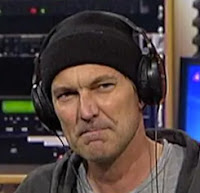
Martin Devlin

Martin Devlin, the sports broadcaster with a gob that runs faster than a rugby winger, loves playing the everyman hero on NZ’s airwaves. His rants often veer from rugby scores into culture war territory, slagging off political correctness or “snowflakes” with all the subtlety of a bulldozer. 

He claims to champion fairness and straight talk, yet his verbal grenades at marginalised groups, like Māori or trans people, reveal a selective sense of who deserves a fair go. Devlin’s blokey charm pulls in the punters, but his playbook is predictable: amplify outrage, dodge accountability, and repeat ad infinitum.

While he bangs on about keeping sports pure, his willingness to wade into divisive social issues with half-baked takes undermines his “just a sports guy” persona. It’s a classic case of a broadcaster using his platform to fuel culture wars, all while pretending he’s just calling it like he sees it.


Maurice Williamson
Maurice Williamson, a former National Party MP and self-styled libertarian maverick, has long been a polarising figure in New Zealand’s political landscape, known for his theatrical flair and unapologetic push for free-market policies. 

From his early days as “Mr. Pakuranga” to his ministerial roles under John Key, Williamson’s championed deregulation and individual liberty. But now he's more comfortable attacking the very political parties who uphold these values. His selective outrage, railing against government overreach while sidestepping issues like Māori land rights or systemic inequities, reveals a narrow view of “freedom” that prioritises the privileged. 

Now a pundit and occasional provocateur, he keeps the conservative base buzzing with disinformation columns and talks that blend wit with a staunch defence of the status quo, proving he’s still a showman, even if the script feels dated.

Michael Laws
Michael Laws, NZ’s eternal stirrer, has spent decades perfecting the art of being loudly wrong, from shock-jock radio to his stint as Whanganui mayor. His columns and commentaries drip with scorn for “woke” culture, Māori rights, or anything smelling remotely progressive, all cloaked in proclimations of “common sense.”

He also claims to speak for the “ordinary Kiwi,” yet his divisive rhetoric often targets the marginalised, ignoring systemic issues like Māori dispossession that don’t fit his bigoted narrative. Laws’ knack for turning outrage into a personal brand is almost admirable, if it weren’t so transparently racist.

While banging on about free speech and fairness, his selective silence on historical injustices or social inequities reveals a conveniently narrow view of justice. He often mistakes being offensive for being insightful, keeping the culture wars simmering with his smug, recycled conservatism.


Paul Brennan
Paul Brennan, a talkback radio stalwart, has built a career giving airtime to NZ’s perpetually deluded. His shows are a safe space for callers to vent about “woke” policies, them Maorees, or government mandates, with Brennan nodding along like a sympathetic barman whose on the bottle. 

He claims to foster open debate, yet his questions rarely challenge assumptions, instead teeing up the next rant for the talkback faithful. While he pontificates about giving “ordinary Kiwis” a voice, his platform amplifies divisive narratives that sideline marginalised groups, like Māori or trans communities, without a second thought. 

Brennan’s not the loudest in the room, but his quiet enabling keeps the outrage spinning, giving air to gripes that fuel division over solutions. It’s a classic case of a broadcaster playing neutral while stoking the fires of culture wars, all under the guise of “just listening” to the punters.


Peter Williams
Peter Williams, the retired broadcaster turned conservative talkback darling, wields his matey demeanor like a weapon in NZ’s culture wars. His rants slag off “woke” culture, Māori co-governance, and climate policies, sounding like they’re ripped from the racist MAGA playbook. 

He claims to represent “ordinary New Zealanders,” yet his selective outrage ignores systemic issues like Māori inequality or colonial legacies that don’t suit his narrative. Williams’ avuncular charm sells divisive ideas as common sense, keeping the conservative faithful cheering along in ignorance.

While blathering on about free speech and fairness, his silence on historical injustices or marginalised communities’ struggles reveals a narrow view of who counts as “ordinary.” It’s a tired act, using his platform to fuel division while pretending it’s just straight talk. In Aotearoa’s conservative drenched airwaves, Williams proves you can sound like everyone’s mate while picking fights that keep the culture wars alive.


Rodney Hide
Rodney Hide, the openly racist former ACT Party leader, has reinvented himself as NZ’s libertarian loudmouth, banging on about government overreach with born-again zeal. His columns and social media are a love letter to deregulation, individualism, and, surprise, anti-Māori sentiment, all framed as “economic logic.” 

He claims to champion freedom for all, yet his dismissal of Treaty rights and Māori grievances reveals a selective sense of who deserves that freedom. Hide’s knack for dressing up bias and prejudice as principle is admirable, but only for those who are equally as racist.

While he preaches about cutting red tape to save the economy, his silence on corporate greed or environmental costs shows a conveniently narrow lens. The bloke who once danced on TV now tap-dances around accountability, keeping the right-wing faithful fired up with recycled rhetoric that ignores complexities in favour of a simplistic “every man for himself” mantra.


Steven Joyce
Steven Joyce, the ex-National Party bigwig, new chair for New Zealand Media and Entertainment, a media company overseeing numerous newspapers, radio stations and digital platforms, and self-styled economic guru, has reinvented himself as a pundit who can’t resist a dig at anything remotely progressive in Aotearoa. 

Once the brains behind National’s “rock star economy” spin, he now flogs free-market dogma through columns and consultancy gigs, slagging off government spending, Māori co-governance, and “woke” red tape. 

He claims to champion prosperity for all Kiwis, yet his push for deregulation often ignores the environmental and social costs that hit vulnerable communities hardest. Joyce’s polished dogma masks a predictable playbook: frame every issue as a threat to business, sprinkle in dog-whistle populism, and call it analysis. 

While talking rubbish about economic fairness, his silence on Māori land rights or systemic inequities reveals a selective bias. His post-political career is less about insight than keeping the old boys’ club cheering, proving some pollies never stop campaigning, even when they should.


Wayne Wright Junior
Wayne Wright Junior, a fringe figure in NZ’s “freedom” movement, thrives on being the contrarian yelling into Aotearoa’s digital void. His protests against vaccine mandates and 5G conspiracies are a cocktail of distrust and defiance, claiming to defend Kiwi rights against tyranny.

His arguments, heavy on passion but light on evidence, rarely hold up, ignoring the science that protects the communities he claims to champion. His small but vocal following laps up his rants, but his rhetoric fuels chaos over solutions. 

While promoting personal freedom, he’s silent on systemic issues like Māori inequality or historical land theft, revealing a selective sense of justice. Wright’s less a thought leader than a cheerleader for division, shouting about revolution while offering little beyond recycled tropes. In NZ’s political outrage economy, he’s proof a loud voice can still stir the pot, even if it’s empty.

10 Jun 2025

Winston Peters Silent on National’s New Immigration Policy

The National-led government is once again trying to increase immigration with their Parent Boost Visa, a five-year, multi-entry scheme for parents of migrants who already live in New Zealand. This move, dressed up as a boost for “family unity” and “economic growth,” has sparked fury among right-wing groups, exposing the shaky ground beneath Luxon’s coalition and the deafening silence of NZ First’s Winston Peters. It’s a policy that reeks of political expediency, which tramples over campaign promises and ignores the real pressures on our housing, health, and infrastructure systems.

The Parent Boost Visa, set to open on 29 September 2025, allows migrant New Zealanders to sponsor parents for extended stays, provided they meet health, income, and insurance criteria. Luxon claims it’ll drive economic growth. The problem...Stats NZ already reports a net migration gain of 133,800 in the year to January 2024, a record high, with migrants from India, the Philippines, and China fuelling a population growth rate of nearly 3%. That’s a colossal strain on a country already struggling with low investment in infrastructure, particularly of concern since the National-led government is cutting, in real terms, funding for infrastructure and essential services.

Auckland, in particular, groans under rapid population growth, with no matching investment in services. In December 2023 Luxon himself called New Zealand's high immigration “unsustainable” when the numbers were around 100’000 per year. Yet here he is, announcing policies to promote immigration in a desperate attempt to increase investment in our overpriced housing market. National's new immigration policy is also giving right-wing fascists like Brian Tamaki the ability to recruit new members.


National’s promise to “bring families together” rings hollow when the policy slams the door on anyone without high incomes or significant savings. But the backlash isn’t just from policy wonks or migrant advocates. Many of National’s core supporters, those who cheer “tough on immigration” rhetoric, are apoplectic. They’re not upset about the cost; they’re furious about any policy that appears to open the doors to more “foreigners." Posts brimming with xenophobic bile decry the visa as a betrayal, with some calling it a “sellout to globalists.” It’s a bitter irony: a policy meant to appeal to skilled and wealthy migrants has instead alienated the bigoted base National and ACT have long courted.

Right-wing racists in particular are frothing like never before, slamming the visa as “stupidity” that burdens New Zealanders, accusing Luxon of prioritising “foreign nationals looking for an easy ride” over locals. However, negative sentiments are also being expressed in online forums in India and the Philippines, where some migrant communities see it as a cynical grab for wealthy parents’ cash while ignoring the broader impacts.


Yesterday, Indian Newslink reported:

 
Parent Boost Visa: great for some, unaffordable for many

For many middle-class Indian families, these financial thresholds may be difficult to meet. The cost of living in New Zealand is already high and meeting the income requirement while supporting a family can be challenging.

Additionally, accumulating the required savings may not be feasible for many parents, particularly those who have retired or do not have substantial financial assets.


For middle-class Indian families, securing private health insurance that meets these criteria can be costly. Many Indian parents rely on government healthcare in India, which is significantly more affordable than private insurance in New Zealand. The requirement to maintain continuous private health insurance for up to ten years adds a financial burden that may be difficult for families to sustain.


Then there’s NZ First, who campaigned in 2023 on slashing immigration, labelling it unsustainable for the very reasons now playing out: housing shortages, hospital waitlists, crumbling roads...the list goes on and on. Winston Peters waxed lyrical about raising permanent residency requirements and tying migration to economic needs, not family reunions.

But since the Parent Boost Visa policy dropped like a lead balloon on Sunday, Peters has gone quieter than a church mouse. This is a man who built a career on fiery anti-immigration rhetoric, once telling Indian communities to “catch the next flight home” if they didn’t like his policies. Now, as Luxon’s lapdog, he’s complicit in a policy that flies in the face of his party’s core campaign promises and the coalition agreement’s supposed focus on infrastructure-led growth.

Luxon's immigration flip-flop exposes a government more interested in photo-ops rather than addressing people's cost-of-living concerns or the countries infrastructure problems. Peters’ silence is a betrayal of his base, who, for whatever reasons, voted for a brake on migration. With housing even more unaffordable and other required infrastructure lagging, the Parent Boost Visa isn’t really a boost at all. It's a desperate attempt to stop the economy from tanking and another opportunity for a diversionary tactic to take the focus off of what really matters.

7 Jun 2025

Government Damaging New Zealand's International Standing

New Zealand, once a shining example of progressive governance, is faltering under a right-wing Coalition Government determined to drag us back to the colonial dark ages. The “Coalition of Chaos,” as it’s been correctly named, is making Aotearoa an international laughing stock, with Prime Minister Chris Luxon, NZ First leader Winston Peters and ACT leader David Seymour largely leading the clown show in this regressive circus.

From Seymour’s embarrassing Oxford Union defeat to the punitive silencing of Māori MPs for performing a haka, alongside a slew of other equally shameful scandals, this government is tarnishing our global reputation with every misstep they take.

Seymour’s Oxford Union shambles was a humiliation for New Zealand. Debating the motion “no one can be illegal on stolen land,” his team bombed spectacularly, exposing his inability to articulate a coherent defence of his bigoted worldview. His smug dismissal of Māori activism as “reprehensible” failed to sway an international audience, highlighting his disconnection from reality. Clearly Seymour’s hubris and racist beliefs aren’t widely shared. This wasn’t just a loss; it was a public relations disaster for a Deputy Prime Minister who’s regressive and racist Treaty Principles Bill should never again see the light of day.


Yesterday, The Post reported:


David Seymour debated at the prestigious Oxford Union, and lost. Here’s what happened

ACT leader and deputy PM David Seymour took part in the famous Oxford Union debate, surrounded by the world’s brightest minds - including Noam Chomsky’s daughter. Harriette Boucher was also watching.

The newly titled deputy prime minister David Seymour took to a different chamber this morning, one with men in suits and ties, and women in gowns and pearls.

Taking part in the Oxford Union debate on Friday morning (Thursday, local time), Seymour argued in opposition to the moot that “no one can be illegal on stolen land”.

“I’m not sure we are going to win that one, based on the crowd response,” he told The Post after.

And they didn’t.


Even more shameful was the punishment of Te Pāti Māori MPs for their haka protest in Parliament last November. Receiving record-breaking suspensions for merely doing a haka, which was justifiably expressing cultural dissent against Seymour’s divisive Treaty Principles Bill, the Māori Party have received numerous interviews from overseas reporters who're scratching their heads in disbelief.

The haka, a powerful symbol of Māori identity, was branded “disorderly” by a government clearly intent on removing all indigenous rights. International press, such as the BBC, Al Jazeera, NPR, CNN and ABC News reported factually, portraying Aotearoa as a nation that punishes Māori for a haka that is widely recognised as symbolic of New Zealand, creating perceptions of racist governance that will keep tourists away in droves.


Compounding this mess is Chris Luxon’s utter failure to lead in any meaningful way whatsoever. Perpetually in the dark on any details when it suits him about his Minister's and staff, Luxon has made a career as PM by shirking his responsibilities. From his underling's numerous missteps to his press secretary, Michael Forbes, who was investigated by Police for recording sex workers without consent, Luxon often claims that he’s absolutely clueless! His hands-off approach has left the shambles of a Coalition directionless, allowing his subordinates to run riot while Luxon tries to cover-up the mess with vague platitudes and false promises.


On Thursday, 1 News reported:


Why wasn't PM told about police investigation into staffer?

The sudden resignation of one of the Prime Minister's senior press secretaries is raising questions about why Christopher Luxon's office was not told about the police investigation last year.

Michael Forbes left his job as acting deputy chief press secretary on Wednesday and has apologised after accusations he recorded audio of sessions with sex workers, and had intrusive photos of women in public and footage shot through windows at night.

Police said they got a complaint from a Wellington brothel last July after images were found on a client's phone, but decided the case did not meet the threshold for prosecution.


The government’s mismanagement doesn’t stop there. Recently, Winston Peters called Te Pāti Māori “extremists” and mocked Rawiri Waititi’s moko, a face tattoo that is widely used by Kaumātua (a respected tribal elder) in New Zealand.

The government’s socially destructive agenda, like cutting public services, ignoring climate commitments and cosying up to corporates to the detriment of our international reputation, erodes our progressive credentials that have taken considerable time, the will of numerous government’s and millions of dollars to build.

Then there’s the rolling back of nearly every progressive policy that Jacinda Ardern made while she was PM, legislation that was widely supported from across the globe.


Climate Change Emissions (Zero Carbon Act):
Previous Policy: The 2019 Zero Carbon Act set a carbon-neutral target by 2050 with carbon budgets and a Climate Change Commission.
Current Action: Core framework retained but softened; repealed Clean Car Discount, reinstated oil/gas exploration, and delayed agricultural emissions pricing (2023–2024).
 
Smoke-Free Generation Legislation:
Previous Policy: Banned tobacco sales for those born after 2008, reduced retailers, and lowered nicotine levels.
Current Action: Repealed in 2024 to preserve tax revenue and avoid black-market risks.
 
Māori Health Authority (Te Aka Whai Ora):
Previous Policy: Established in 2022 to address Māori health disparities via independent governance.
Current Action: Disestablished in 2024, functions returned to Ministry of Health to reduce bureaucracy.
 
KiwiBuild Housing Programme:
Previous Policy: Aimed to build 100,000 affordable homes in 10 years.
Current Action: Scrapped in 2023, replaced with zero state house builds and declining building consents.
 
He Puapua Report Recommendations:
Previous Policy: Proposed Māori co-governance.
Current Action: Halted in 2023, with co-governance policies reversed.
 
Prison Population Reduction Target:
Previous Policy: Targeted a 30% prison population reduction by 2033, focusing on rehabilitation.
Current Action: Abandoned in 2023, with a shift to tougher sentencing and more jails.
 
Te Reo Māori Integration and Bonuses:
Previous Policy: Promoted Te Reo in public services with salary bonuses for fluency.
Current Action: Bonuses ended and English mandated as primary public service language (2023).
 
Gender and Sexuality Education (RSE) Guidelines:
Previous Policy: Updated school curriculums to include gender and sexuality diversity (2020).
Current Action: Guidelines replaced in 2023 to focus on academic achievement.
 
Violent Extremism Research Centre:
Previous Policy: Established post-2019 Christchurch attacks to research extremism.
Current Action: Defunded in 2024, seen as reducing “woke” spending.


Aotearoa’s once-stellar reputation for integrity is also slipping, with the 2024 Corruption Perceptions Index (CPI) ranking New Zealand fourth at 83 points, down from 85 in 2023 and a high of 91 in 2015. This steady decline, mainly driven by falling business confidence in government integrity, as noted in the World Economic Forum’s Executive Opinion Survey, signals growing perceptions of corruption in public procurement, immigration, and political lobbying.

Transparency International New Zealand warns of complacency, highlighting weak anti-corruption measures and insufficient transparency in political financing. This slide risks tarnishing “Brand NZ,” threatening economic trust and global standing, which will assuredly mean less investment.

Internationally, Chris Luxon’s mishandling of his press secretaries recording of sex workers, is further damaging our reputation. Then there’s the government prioritising Budget debates over addressing the haka suspensions, ensuring Te Pāti Māori’s absence during the Regulatory Standards Bill’s passage through Parliament, displaying that the coalition of chaos is obsessed with control, not dialogue, which further showcases their racism to the world.

New Zealand’s reputation is on life support. Seymour’s failed debate, the Coalition’s vendetta against Māori, Luxon’s weak leadership, and numerous globally recognised scandals are causing significant damage that will take many decades to repair. Aotearoa deserves better than this Coalition of Chaos, hell-bent on making us a global cautionary tale of squandered goodwill. It’s time to reject this regressive circus and demand leadership that puts our country back on track to a pathway of progress.